FR
Français
 DE
Deutsch
 IT
Italiano
 EN
English
Practical Ways to Save Energy and Protect Building Installations
Property managers can reduce energy costs, prevent avoidable damage and improve tenant comfort with a structured approach to maintenance, monitoring and everyday energy use.
Energy efficiency is not only about lowering utility bills. For property managers, it also means protecting heating, ventilation, plumbing and electrical systems from unnecessary wear, reducing the risk of breakdowns and maintaining a comfortable, safe building for occupants.
The most effective improvements usually come from combining regular maintenance, clear tenant communication and simple monitoring. The following measures are suitable for apartment buildings, rental properties and other managed premises in Switzerland.
Start with an energy and maintenance overview
Before investing in new equipment, review how the property currently uses energy and where maintenance problems occur. Compare electricity, heating and water consumption over several billing periods, taking seasonal variations into account.
- Record meter readings at regular intervals.
- Identify unusual increases in heating, electricity or water consumption.
- List recurring faults, emergency call-outs and repairs.
- Note the age, condition and service history of major installations.
- Check whether common areas are being heated or lit when they are unoccupied.
This information helps prioritise improvements and can reveal issues such as leaking water, poor temperature control, permanently operating pumps or lighting that is left on unnecessarily.
Maintain heating systems before the cold season
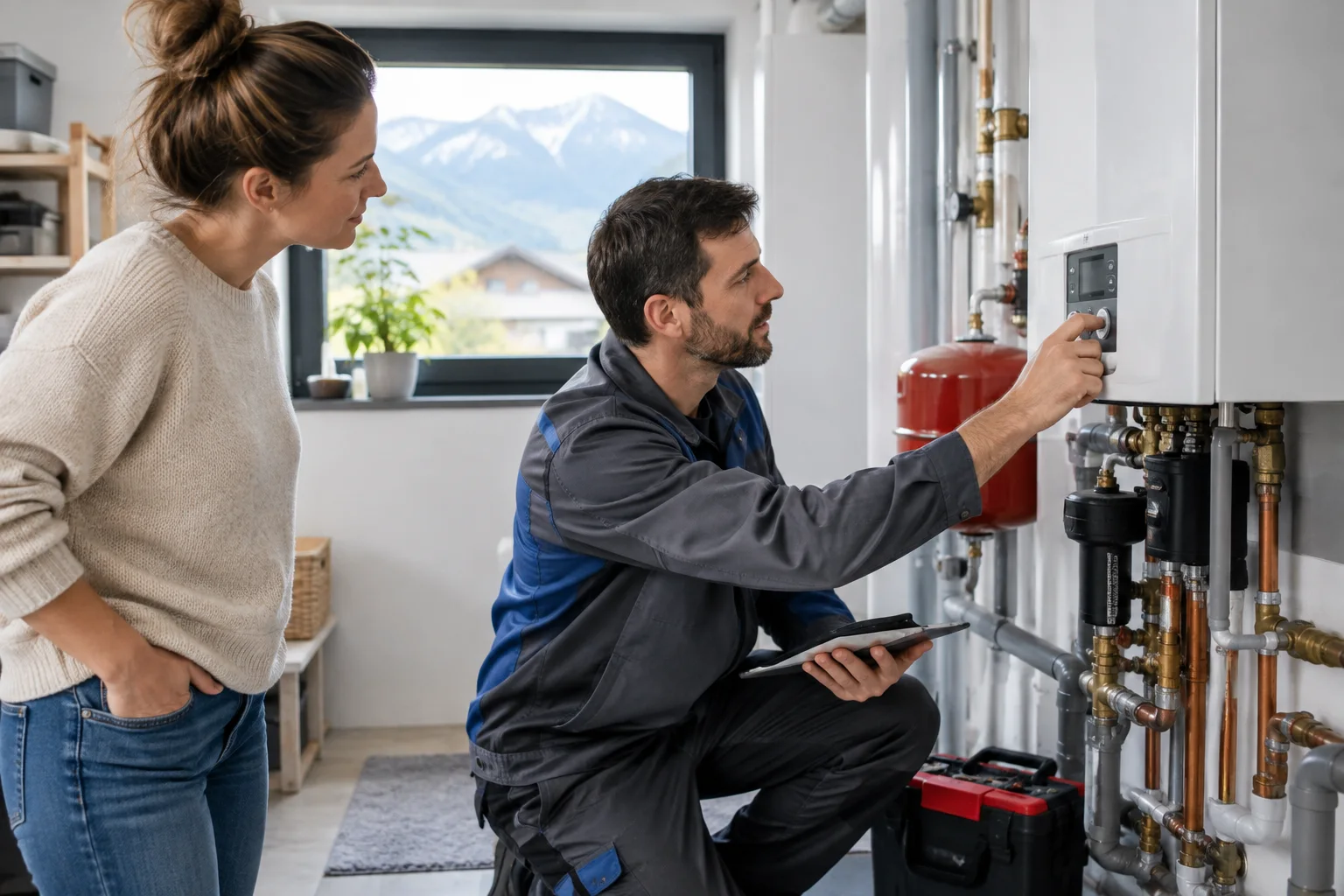
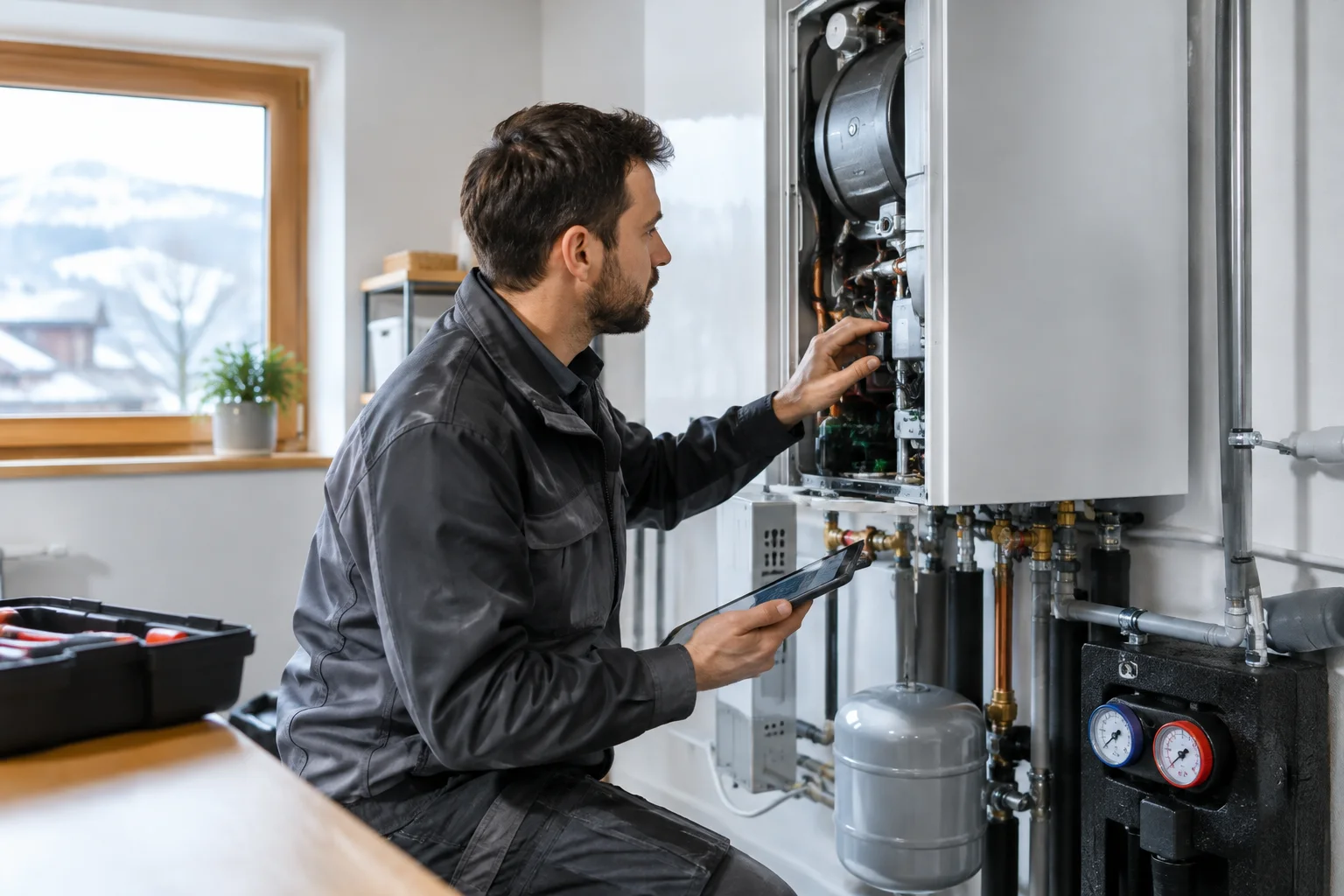
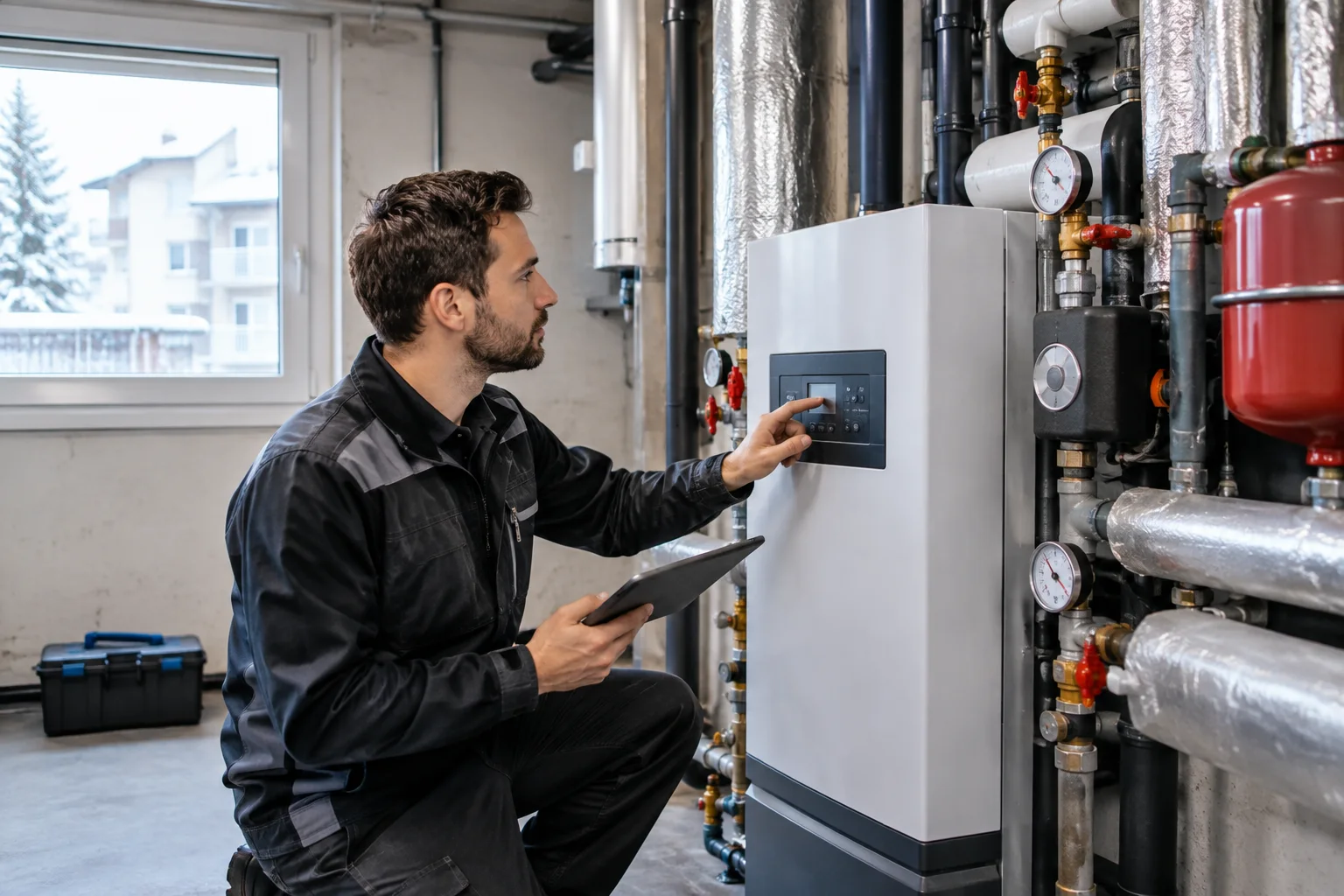
Heating is often one of the largest energy expenses in a building. Arrange professional servicing and inspection before the heating season begins. A technician can assess the boiler, heat pump, circulation system, controls and safety components, while also checking whether the system is operating efficiently.
Useful management measures include:
- Keeping plant rooms accessible and free from stored items.
- Checking that radiators and thermostatic valves are not blocked by furniture or curtains.
- Inspecting pipes, valves and visible connections for signs of leaks or corrosion.
- Ensuring heating schedules match actual occupancy patterns.
- Balancing the heating system when some rooms are consistently too warm and others too cold.
Do not ask tenants or unqualified staff to open boilers, alter combustion settings or work on electrical components. Gas, heating and electrical work should be performed by appropriately qualified professionals.
Reduce heat loss without compromising ventilation
Sealing obvious draughts around windows and doors can improve comfort and reduce heat loss. However, ventilation must not be blocked. Buildings need adequate air exchange to limit condensation, mould and poor indoor air quality.
Inspect window seals, entrance doors, basement openings and communal areas. Where windows are frequently left open while heating is running, provide tenants with clear guidance on short, effective airing rather than leaving windows tilted for long periods during cold weather.
If the property has mechanical ventilation, arrange regular cleaning and servicing of filters, fans and controls. Never cover grilles or disconnect ventilation equipment without professional advice.
Use lighting and controls more efficiently
Energy-efficient LED lighting, occupancy sensors and timers can significantly reduce consumption in stairwells, garages, storage areas and other communal spaces. Check that controls are correctly configured: lights that switch off too quickly may create a safety risk, while lights that remain on continuously waste energy.
Keep emergency lighting, fire-safety systems and other critical equipment separate from ordinary energy-saving controls. These systems must remain available and maintained in accordance with applicable requirements.
Protect electrical installations
Preventive inspection helps identify overloaded circuits, damaged equipment and deteriorating connections before they cause disruption or damage. Property managers should arrange professional checks when there are repeated tripped breakers, flickering lights, burning smells, warm sockets, buzzing sounds or unexplained power interruptions.
Communal electrical rooms, distribution boards and technical cabinets should remain dry, accessible and free of combustible storage. Only authorised, qualified personnel should open distribution boards, modify wiring or reset persistent faults. Repeatedly resetting a protective device without finding the cause can increase the risk of overheating, fire or equipment damage.
Control water use and prevent leaks
A small leak can cause extensive structural damage if it remains unnoticed. Inspect visible pipework, valves, plant rooms and basement areas, and investigate damp patches, staining, unusual smells or continuously running water.
Consider leak detection or water monitoring in properties with a history of incidents or vulnerable areas. Make sure shut-off valves are labelled and that authorised staff know their location. Tenants should have a simple reporting channel for dripping taps, running toilets and signs of water ingress.
Do not attempt to repair concealed pipes or pressurised systems without professional assistance. In an emergency, follow the property's established procedure, contact the relevant emergency service or specialist, and document the incident.
Improve tenant communication
Residents play an important role in reducing energy use and reporting problems early. Short, practical guidance is more effective than general reminders. Explain how to report leaks, heating faults, damaged sockets and unusual noises, and clarify which adjustments tenants may make themselves.
Useful messages include:
- Report leaks, condensation, mould and heating problems promptly.
- Keep radiators and ventilation grilles unobstructed.
- Switch off lights and appliances in shared spaces when appropriate.
- Do not use damaged extension leads or overload sockets.
- Do not interfere with technical rooms, meters or safety equipment.
Create a preventive maintenance schedule
A written schedule makes responsibilities clear and reduces reliance on emergency repairs. Include heating and ventilation servicing, electrical inspections, lighting checks, roof and façade observations, plumbing inspections, fire-safety equipment and seasonal preparation.
Record the date, findings, corrective actions, responsible contractor and completion status for every inspection. Keep technical documentation, warranties and service reports together so that faults can be diagnosed more quickly.
Know when to call a professional
Contact a qualified specialist promptly if you notice smoke, burning smells, exposed conductors, repeated circuit trips, water near electrical equipment, gas odours, significant leaks or heating-system failures. Evacuate and contact the appropriate emergency service where there is an immediate risk to people or property.
For property managers, the best energy strategy is a combination of measured consumption, planned maintenance and fast response to warning signs. Professional inspections and well-maintained installations protect the building, support tenant comfort and help avoid costly emergency interventions.