FR
Français
 DE
Deutsch
 IT
Italiano
 EN
English
Practical Ways to Save Energy and Protect Your Home Appliances
Use your household appliances more efficiently, reduce standby consumption and help prevent avoidable damage with these practical, safety-first tips for Swiss homes.
Household appliances account for a significant share of energy use in many homes. Small changes to how you choose, operate and maintain them can lower electricity consumption while helping extend the life of your equipment. The following advice is suitable for everyday use and focuses on safe, practical measures.
Choose efficient appliances when replacing equipment
When buying a new appliance, compare its energy label rather than relying only on the purchase price. Check the annual energy consumption, capacity and operating costs. An appliance that costs slightly more initially may be less expensive over its lifetime if it uses substantially less electricity.
Choose a size that matches your household’s needs. An oversized refrigerator, freezer or washing machine can consume more energy than necessary, while regularly overloading a smaller appliance can reduce performance and place additional strain on it.
Reduce standby consumption
Many appliances continue to draw power when they are switched off but remain in standby mode. Televisions, media equipment, computers, printers, coffee machines and chargers are common examples.
- Turn appliances off fully when they will not be used for an extended period.
- Use a switched power strip for grouped entertainment or office equipment.
- Unplug chargers and adapters that are not connected to a device.
- Consider timers or smart plugs for suitable low-risk equipment, following the manufacturer’s instructions.
Do not use power strips or extension leads to connect high-power appliances such as ovens, portable heaters or washing machines unless the equipment is specifically suitable and correctly rated. If you are unsure, ask a qualified professional.
Use refrigerators and freezers efficiently
Set the refrigerator to approximately 4 °C and the freezer to around −18 °C, unless the manufacturer recommends otherwise. Colder settings generally use more energy without improving food safety.
- Allow hot food to cool before placing it in the refrigerator, while following food-safety guidance.
- Keep the doors closed as much as possible and check that seals are clean and intact.
- Leave sufficient space around ventilation openings so heat can escape.
- Defrost appliances that are not frost-free when ice build-up becomes significant.
- Clean accessible ventilation areas according to the manufacturer’s instructions.
If a refrigerator becomes unusually hot, noisy or unreliable, arrange a professional inspection rather than attempting to repair electrical or refrigerant components yourself.
Make washing and drying more economical
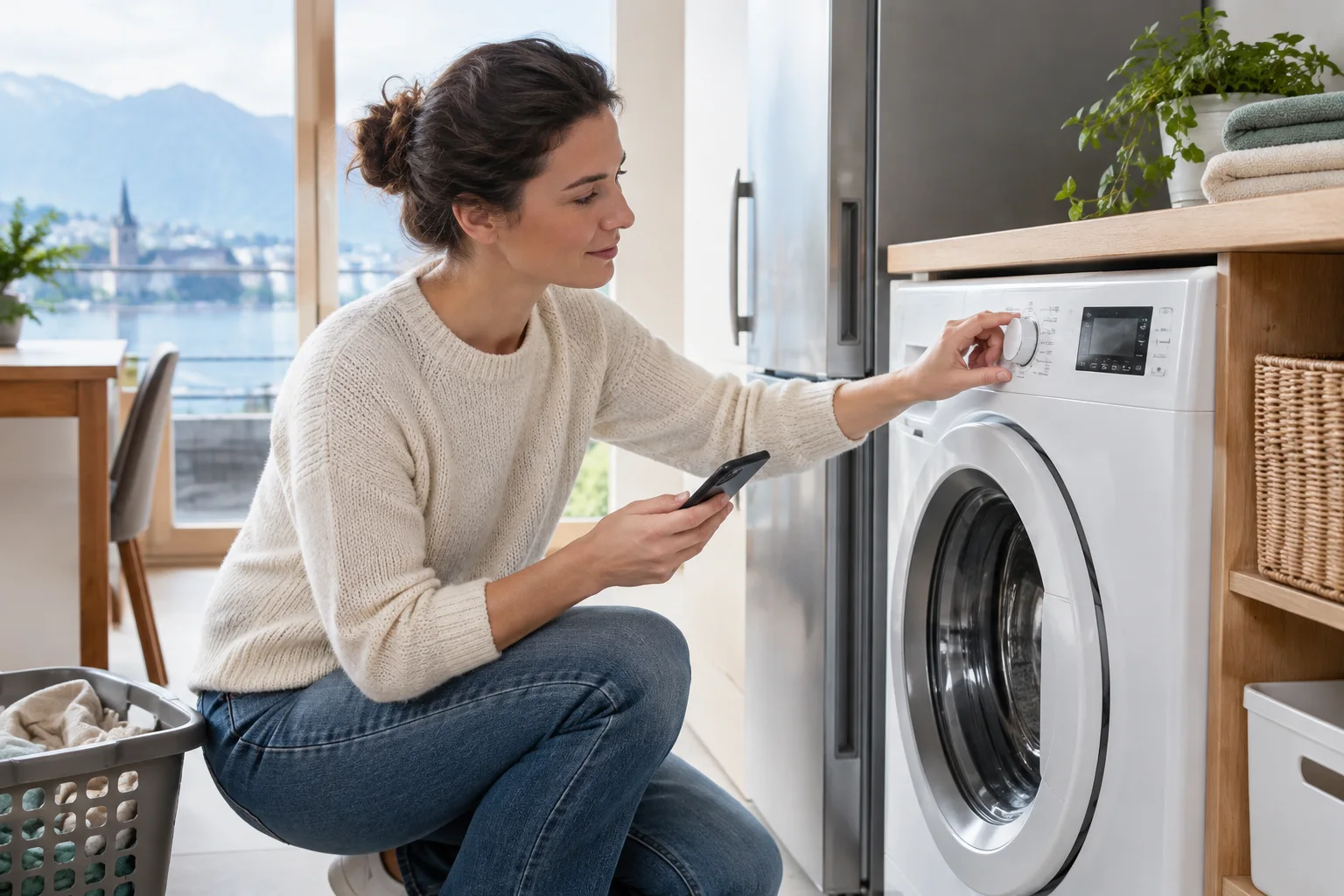
Run washing machines and dishwashers with full, but not overloaded, loads. Select eco programmes where practical; they may take longer but often use less water and energy. Use lower-temperature cycles when appropriate for the fabrics or dishes.
Air-drying clothes is usually the most energy-efficient option. If you use a tumble dryer, spin clothes thoroughly first, clean the filter after each cycle and empty the water container or check the drainage system as required. Poor airflow can increase energy use and create a safety risk.
Use cooking appliances wisely
- Match the pan to the hob zone and use a lid where suitable.
- Use a kettle to heat water efficiently, but boil only the amount you need.
- Avoid opening the oven repeatedly while cooking.
- Use the microwave for small portions when it is suitable for the food.
- Keep oven seals clean and replace damaged seals through an approved service provider.
Never cover ventilation openings or place combustible materials near cooking appliances. Allow ovens, hobs and other heat-producing equipment to cool safely after use.
Protect appliances from electrical problems
Surge protectors may help protect sensitive electronics from certain voltage disturbances, but they are not a substitute for a properly maintained electrical installation. In areas exposed to storms or power-quality issues, ask a qualified electrician whether additional protection, such as suitable surge protection at the electrical panel, is appropriate for your home.
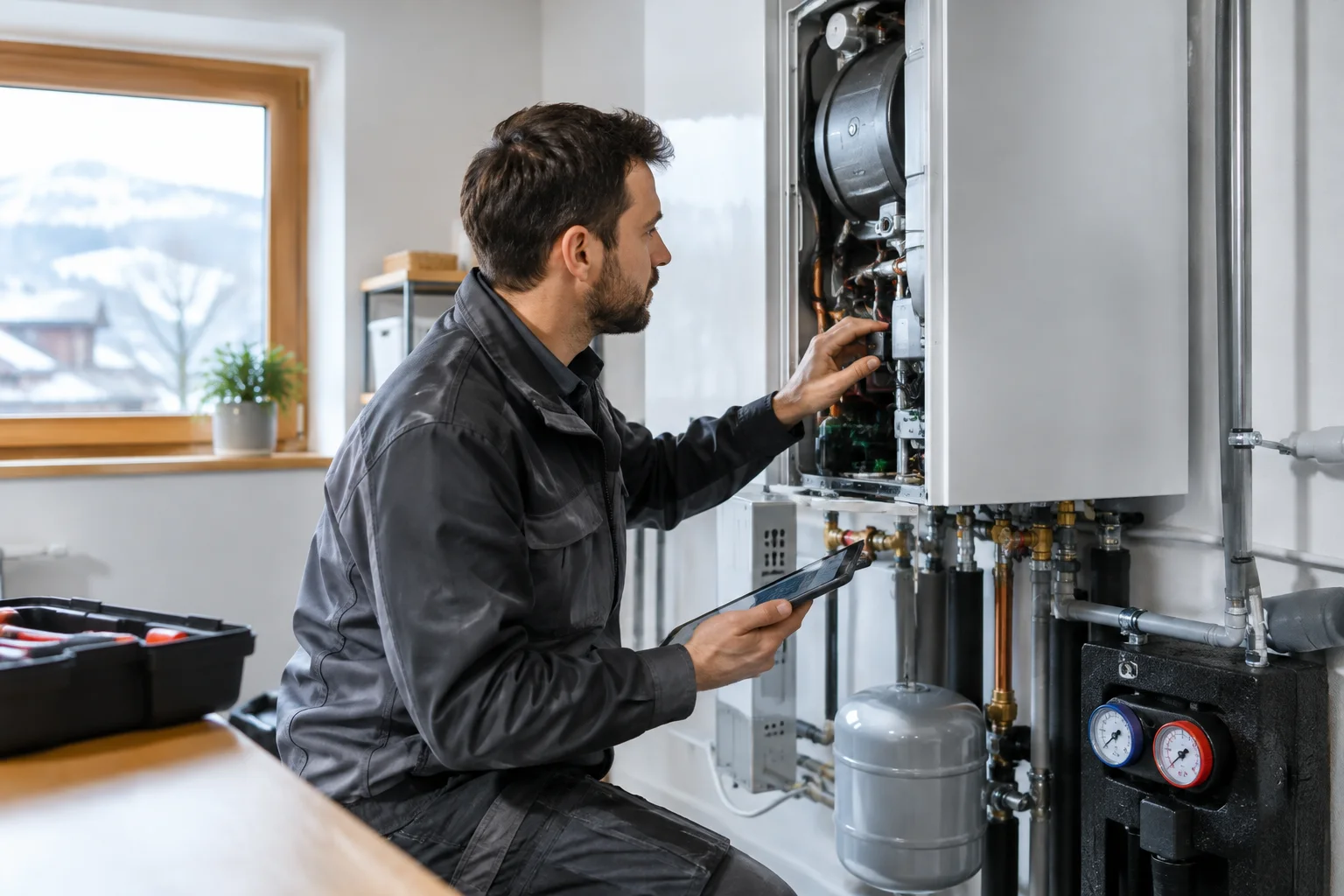
Inspect appliance cables and plugs visually. Stop using equipment if you notice scorch marks, fraying, a damaged plug, unusual heat, repeated tripping or a burning smell. Do not open the appliance or carry out internal electrical repairs yourself. Disconnect it safely if possible and contact an authorised repair service or qualified electrician.
Plan maintenance instead of waiting for a breakdown
Follow the manufacturer’s maintenance schedule and keep ventilation areas, filters and seals clean. Arrange professional servicing for appliances that show repeated faults, unusual noises, overheating or declining performance. Regular maintenance can improve efficiency and identify hazards before they become more serious.
When leaving home for an extended period, switch off suitable appliances, close water supplies where appropriate and follow the manufacturer’s instructions. Do not disconnect equipment that must remain powered for safety or essential functions without checking first.
A simple monthly energy check
- Review your electricity consumption and compare it with previous periods.
- Identify appliances that are old, rarely used or frequently left in standby mode.
- Check refrigerator seals, dryer filters and visible appliance cables.
- Look for unusual heat, noise, smells or repeated circuit interruptions.
- Arrange professional advice for any electrical fault or installation concern.
Small operating changes can make a measurable difference, but safety should always come first. For appliance circuits, socket problems, repeated breaker trips or suspected faults in the electrical installation, contact a qualified electrician rather than attempting a DIY repair.