FR
Français
 DE
Deutsch
 IT
Italiano
 EN
English
Practical Ways to Save Energy and Protect Your Home’s Installations
Simple maintenance habits can reduce energy waste, prevent avoidable breakdowns and extend the life of your home’s electrical, heating and plumbing systems. Learn what to check—and when to call a professional.
Energy savings are not only about changing daily habits. Regular repairs and preventive maintenance also help your home use less energy while protecting essential installations from premature wear, leaks and breakdowns.
In Switzerland, where homes may rely on electric heating, heat pumps, boilers, ventilation systems and complex building services, small faults can quickly become expensive. The practical steps below can help you identify problems early and arrange the right repair safely.
Start with the warning signs
Unusual noises, burning smells, repeated circuit-breaker trips, water stains, weak heating, fluctuating temperatures or unexpectedly high energy bills should not be ignored. These symptoms may indicate a fault that is reducing efficiency or placing unnecessary strain on an installation.
Contact a qualified technician if you notice:
- Flickering lights, damaged sockets or warm electrical outlets
- Repeated power interruptions or circuit-breaker trips
- Water leaks, damp patches or signs of corrosion
- Radiators that remain cold, unusual boiler noises or inconsistent hot water
- A heat pump, ventilation unit or appliance that runs continuously
- Burning, gas or sewage smells
If you smell gas, see smoke or suspect an electrical fire, leave the area if it is safe to do so, avoid switches and flames, and contact the appropriate emergency service or utility provider. Do not attempt to locate or repair the fault yourself.
Keep electrical installations efficient and safe
Damaged cables, loose connections and overloaded extension leads can waste energy and create serious safety risks. Arrange a professional inspection when an installation is old, has been modified repeatedly or shows visible damage.
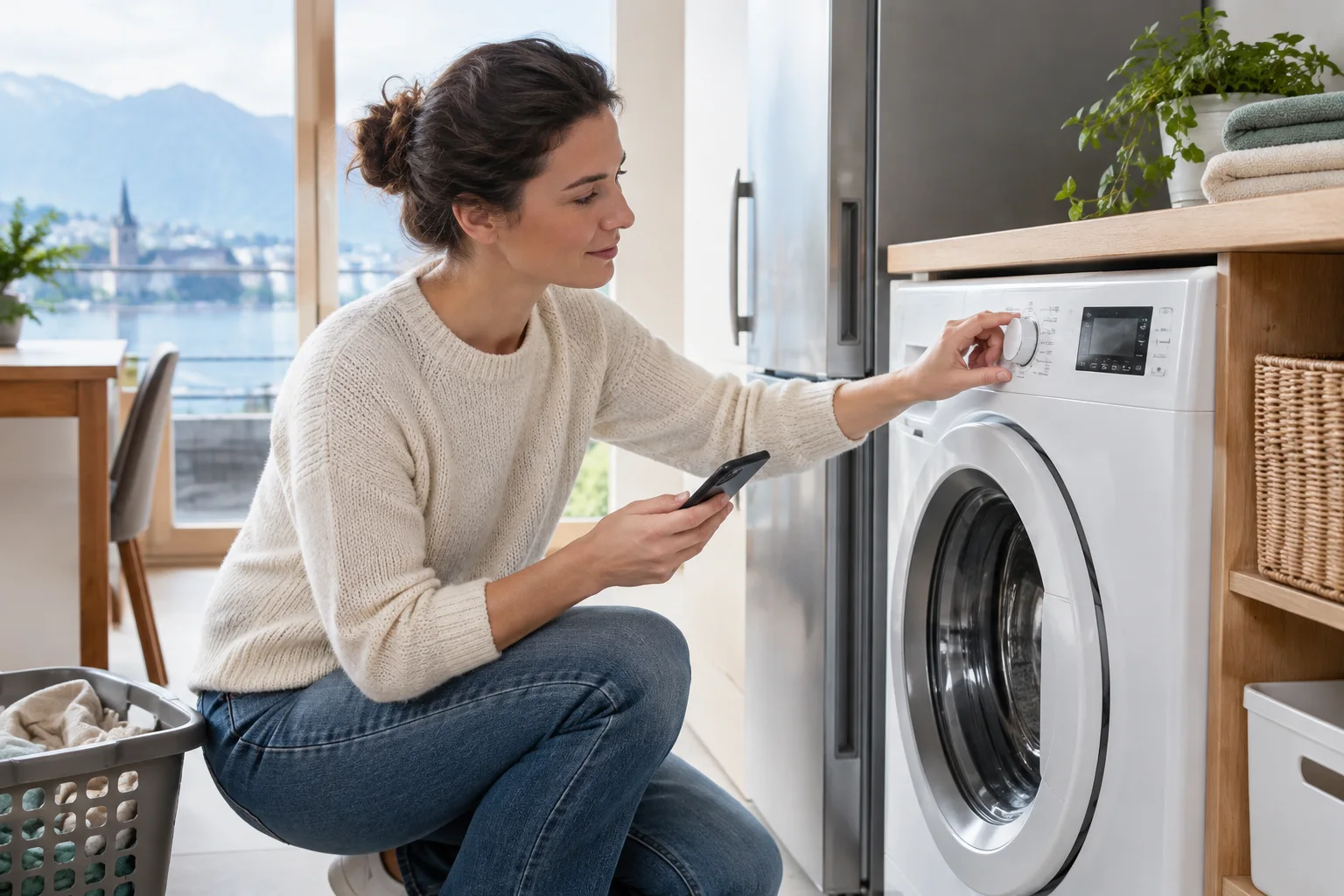
To reduce avoidable consumption, switch off equipment that does not need to remain in standby mode and replace inefficient lamps with suitable LED alternatives. Never remove protective covers, alter wiring or work inside a distribution board unless you are a qualified electrician. Electrical repairs should be carried out by a suitably authorised professional in accordance with applicable Swiss requirements.
Maintain heating and hot-water systems
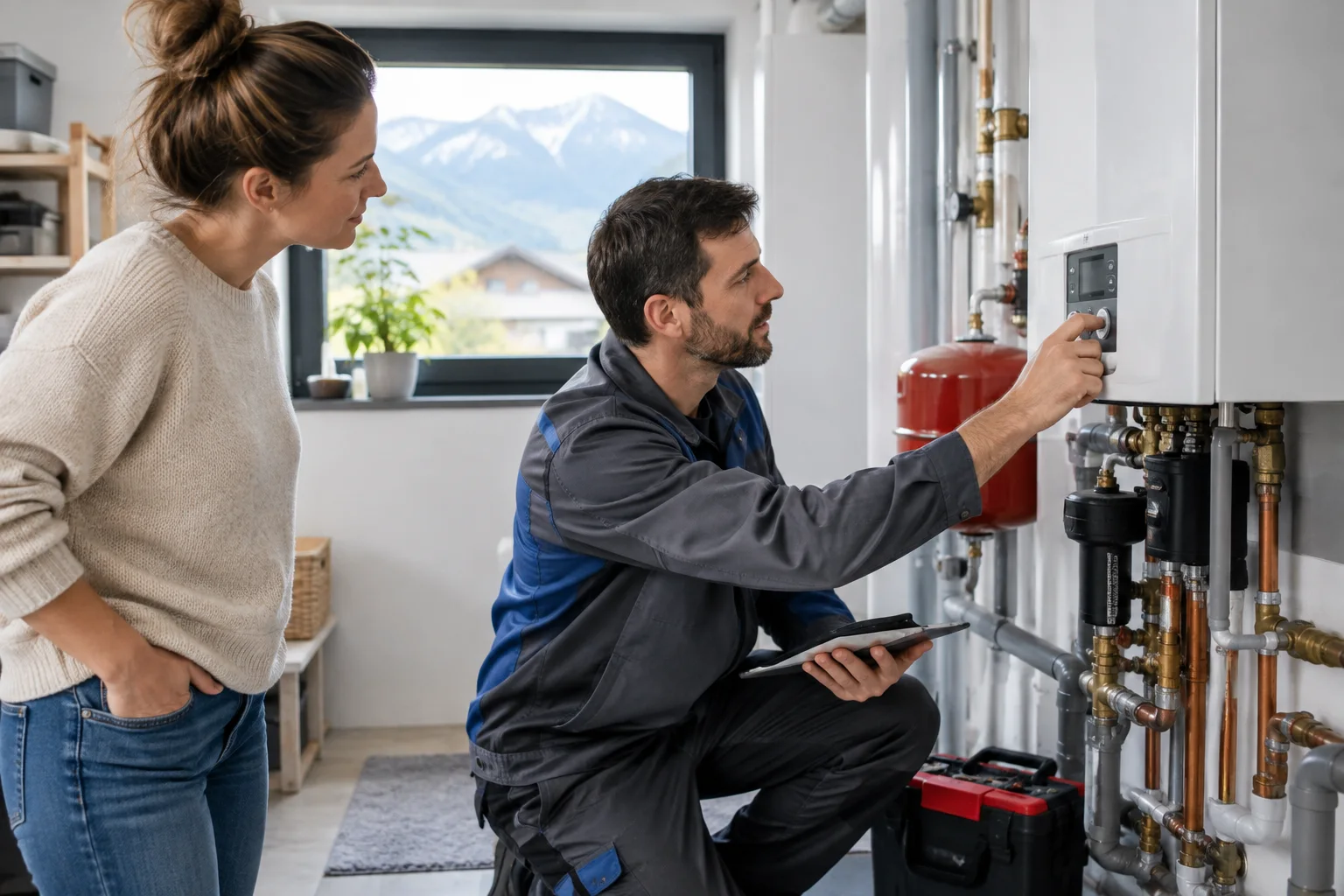
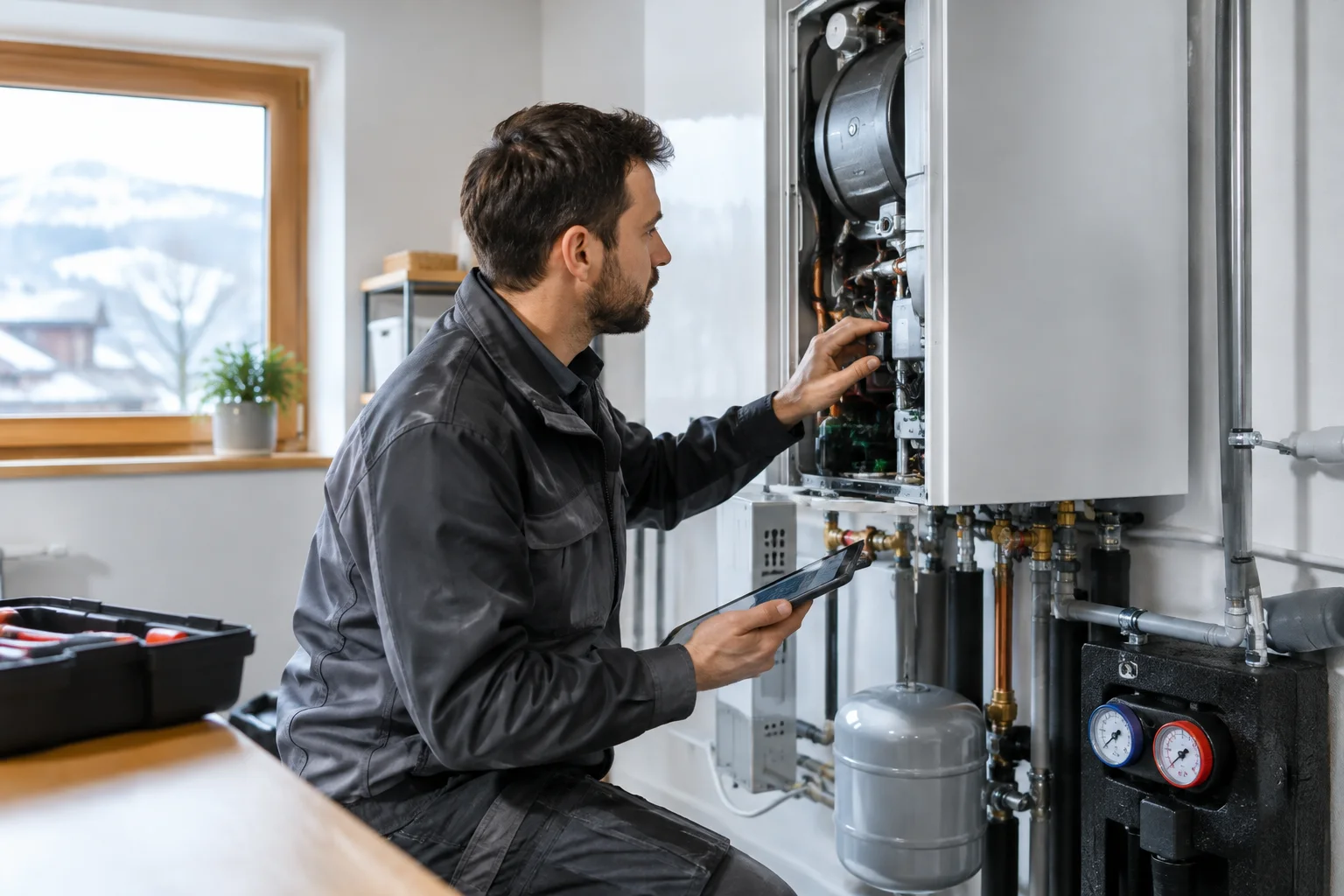
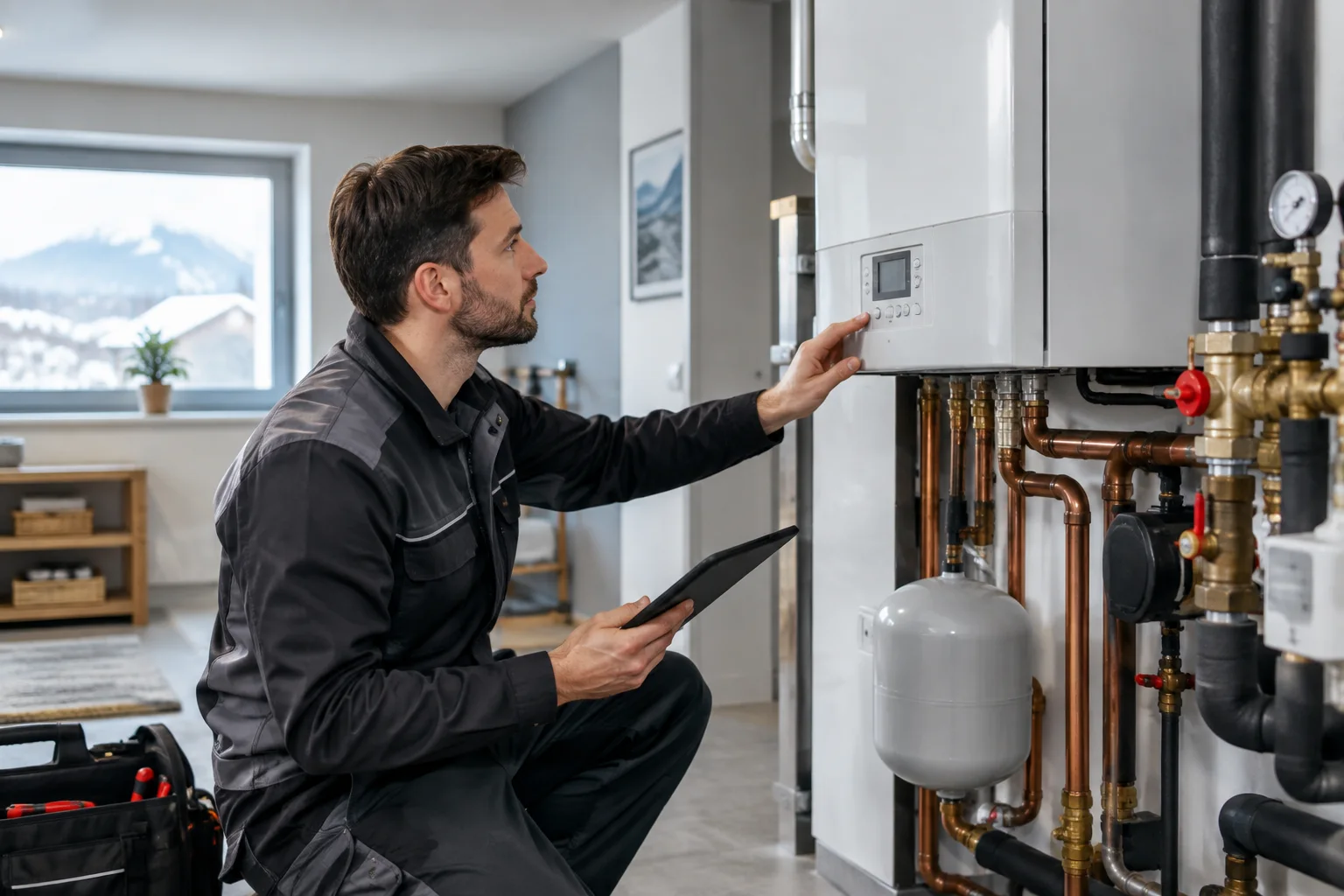
Heating systems often account for a significant share of household energy use. A service visit can identify blocked filters, faulty sensors, circulation problems, pressure issues and components that are operating outside their normal range.
Keep radiators and air vents unobstructed, avoid covering thermostatic valves and follow the manufacturer’s maintenance instructions. If a boiler, heat pump or hot-water system is losing pressure, making new noises or failing to heat consistently, arrange a repair rather than repeatedly resetting it.
Do not open combustion appliances, adjust gas components or drain pressurised systems without professional guidance. These tasks can involve gas, electricity, hot water and carbon-monoxide risks.
Prevent leaks and protect plumbing installations
A small leak can damage walls and floors while also increasing water and heating costs. Check visible pipework, taps, toilets and appliance connections for moisture, limescale or corrosion. A running toilet or dripping tap may seem minor, but repairing it promptly can prevent wasted water and more extensive damage.
Know where the main water shut-off valve is located and keep access clear. If a pipe bursts, shut off the water if you can do so safely, move valuables away from the affected area and call an emergency plumber. Avoid using electrical equipment in wet areas.
Look after ventilation and air quality
Blocked filters and dirty ventilation components can make systems work harder and may reduce indoor air quality. Clean or replace accessible filters according to the manufacturer’s instructions, but arrange professional servicing for faults, inaccessible components or persistent condensation.
Do not block air inlets or outlets. Adequate ventilation helps control humidity and protects the building fabric from mould and moisture-related damage.
Use repairs as an opportunity to improve efficiency
When a technician repairs a fault, ask whether the underlying cause can be addressed as well. Examples include improving insulation around accessible pipework, correcting poor airflow, replacing worn controls or checking whether a timer, thermostat or sensor is functioning correctly.
Repairing a component is often more economical and less wasteful than replacing an entire system. However, an older installation may no longer be reliable or efficient. A professional can explain the options, expected running costs and whether replacement is justified.
Create a simple maintenance plan
- Record the age and service history of major installations.
- Check visible equipment for damage, leaks and unusual sounds.
- Replace accessible filters and clean components as recommended.
- Book periodic servicing for heating, ventilation and other specialist systems.
- Arrange repairs promptly when energy use changes or warning signs appear.
- Keep invoices, inspection reports and appliance manuals in one place.
Why professional repairs matter
Professional diagnosis helps identify the real cause of a problem instead of treating only the symptom. It also reduces the risk of injury, water damage, fire, carbon-monoxide exposure or further damage to connected systems.
LDT Services can help homeowners assess faults, coordinate repairs and maintain essential home installations. Before work begins, ask for a clear explanation of the problem, the recommended repair, expected costs and any safety limitations.
Safety note: This article provides general information and is not a substitute for an on-site assessment. Do not carry out electrical, gas, combustion-appliance or pressurised-system repairs yourself. If you are unsure, isolate the area only when safe and contact a qualified professional.