FR
Français
 DE
Deutsch
 IT
Italiano
 EN
English
Practical Ways to Save Energy and Protect Your Electrical Installations
Reduce energy waste, prevent avoidable electrical damage and improve household safety with these practical tips for Swiss homes. Learn what you can do safely and when to call a qualified electrician.
Saving energy is not only about lowering your electricity bill. Efficient use of electricity can also reduce stress on your home’s electrical installation, limit overheating risks and help appliances last longer. With a few sensible habits and regular professional checks, households in Switzerland can improve efficiency without compromising safety.
Start by identifying where electricity is used
Before making changes, look at your electricity consumption over several weeks or compare recent bills. Heating, hot water, cooking, refrigeration, laundry and home office equipment are often among the largest users. Smart meters, appliance displays and energy-monitoring features can help identify unusual or unnecessary consumption.
Pay particular attention to equipment that operates continuously, such as freezers, ventilation systems, network equipment, aquarium systems and standby devices. A qualified electrician can also investigate abnormal consumption or check whether an installation is correctly sized for the property.
Reduce standby consumption
Many devices continue to draw power when they appear to be switched off. Televisions, game consoles, printers, chargers, computers and audio equipment may remain in standby mode. Turn off equipment completely when practical, or use a good-quality switched power strip for compatible devices.
Do not overload power strips or connect one extension lead to another. Keep ventilation openings clear and replace damaged cables, plugs or adapters rather than continuing to use them.
Choose efficient lighting
LED lighting generally uses less electricity and lasts longer than older types of lamps. Replace lamps with suitable LED alternatives and choose the correct brightness, colour temperature and dimming compatibility. If a light flickers, buzzes or becomes unusually hot, switch it off and arrange a professional inspection.
Motion sensors, timers and automatic controls can prevent lights from being left on in corridors, storage areas and outdoor spaces. Outdoor equipment should be suitable for its location and protected against moisture according to the manufacturer’s requirements.
Use appliances efficiently
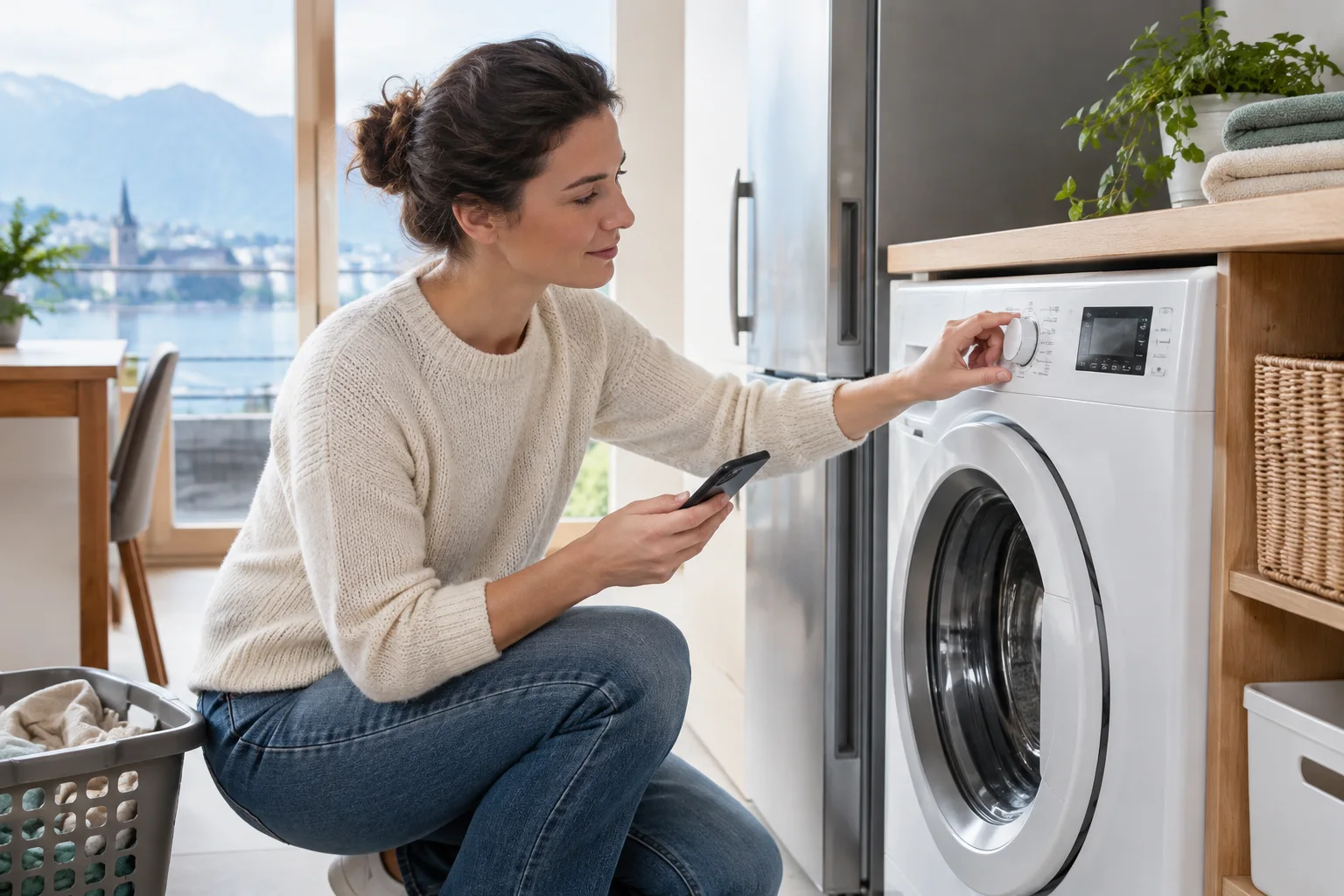
- Run washing machines and dishwashers with full, suitable loads where possible.
- Use eco programmes when they meet your needs, while following the appliance manufacturer’s guidance.
- Allow hot food to cool before placing it in the refrigerator.
- Keep refrigerator ventilation areas clear and check that door seals close properly.
- Remove lint from tumble-dryer filters after each use and keep ventilation paths clear.
- Switch off kitchen appliances at the controls when they are not needed.
Do not use damaged appliances, appliances with exposed conductors or equipment showing signs of overheating. Unplug the appliance if it is safe to do so and contact a qualified professional.
Protect the installation from overloads and surges
High-power appliances such as ovens, cooking hobs, electric heaters, heat pumps and charging equipment should be connected to circuits designed for their load. Avoid operating several high-power appliances through the same extension lead or socket outlet.
Surge protection can help protect sensitive electronics from voltage disturbances, but it is not a substitute for correct earthing, circuit protection or professional maintenance. Ask an electrician to assess suitable protection for your home, especially if you have solar panels, a heat pump, a home battery, a charging point or sensitive IT equipment.
Check warning signs early
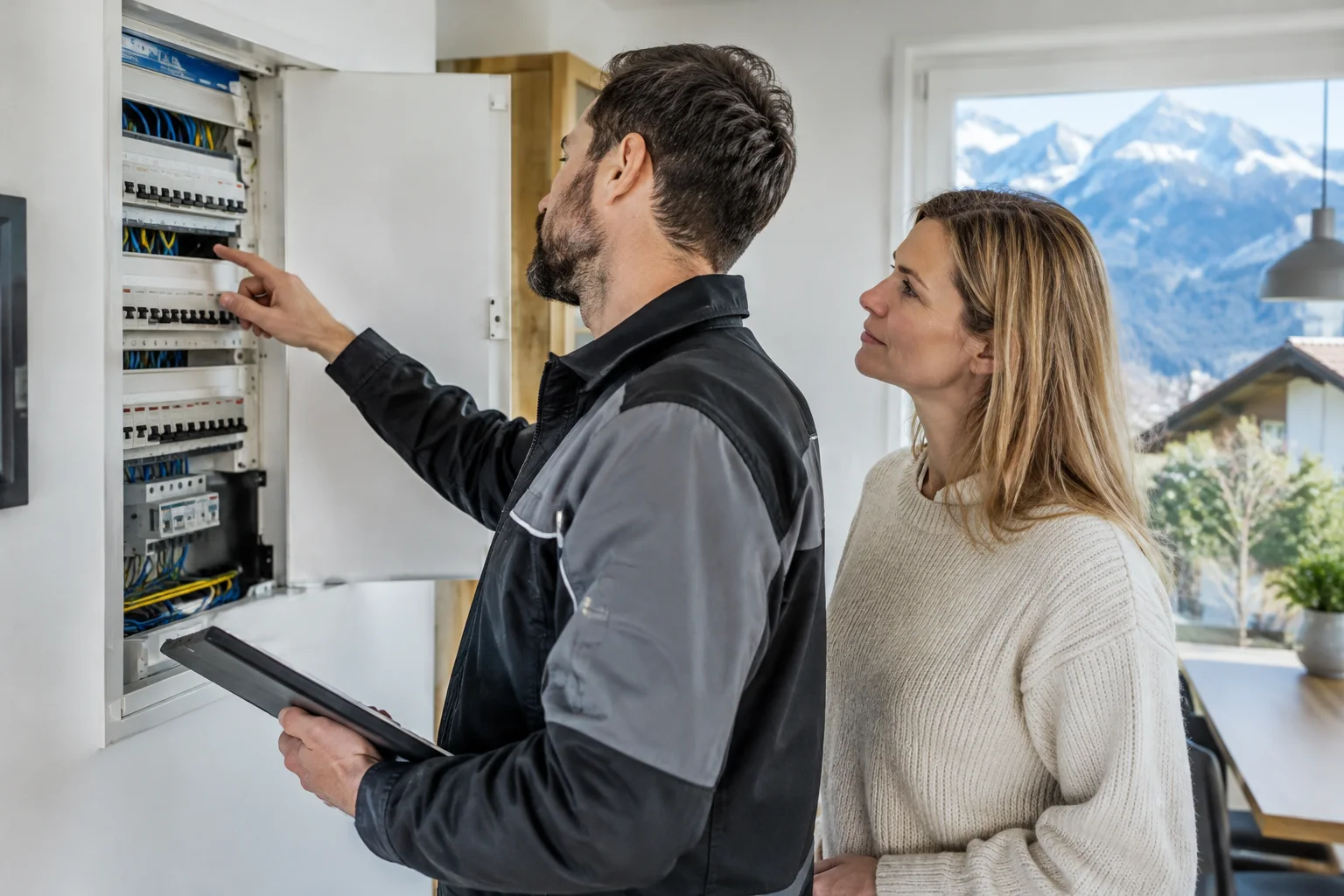
Arrange an electrical inspection if you notice any of the following:
- Frequent tripping of circuit breakers or residual-current devices.
- Burning smells, buzzing sounds, scorch marks or discoloured sockets.
- Warm plugs, switches, cables or socket outlets.
- Flickering lights that are not caused by a faulty lamp.
- Electric shocks, even if they feel minor.
- Loose sockets, damaged covers or exposed wiring.
- Extension leads used permanently or as a substitute for additional fixed outlets.
Do not remove covers, bypass protective devices or attempt to repair fixed wiring yourself. Switch off the affected equipment if possible without touching damaged parts, keep people away from the area and contact a qualified electrician. In an emergency involving smoke, fire or immediate danger, leave the property and call the appropriate emergency services.
Schedule professional checks for older or modified installations
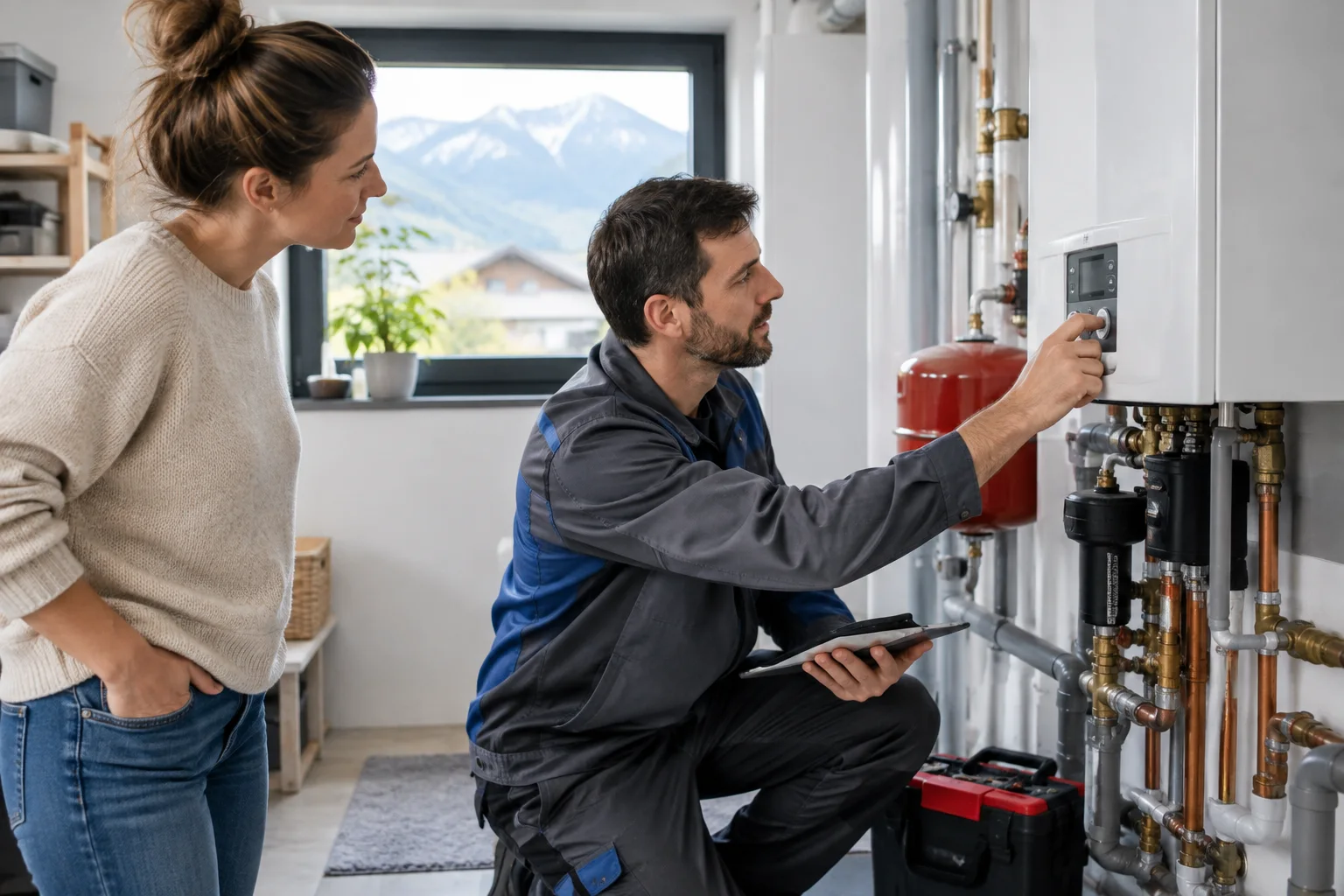
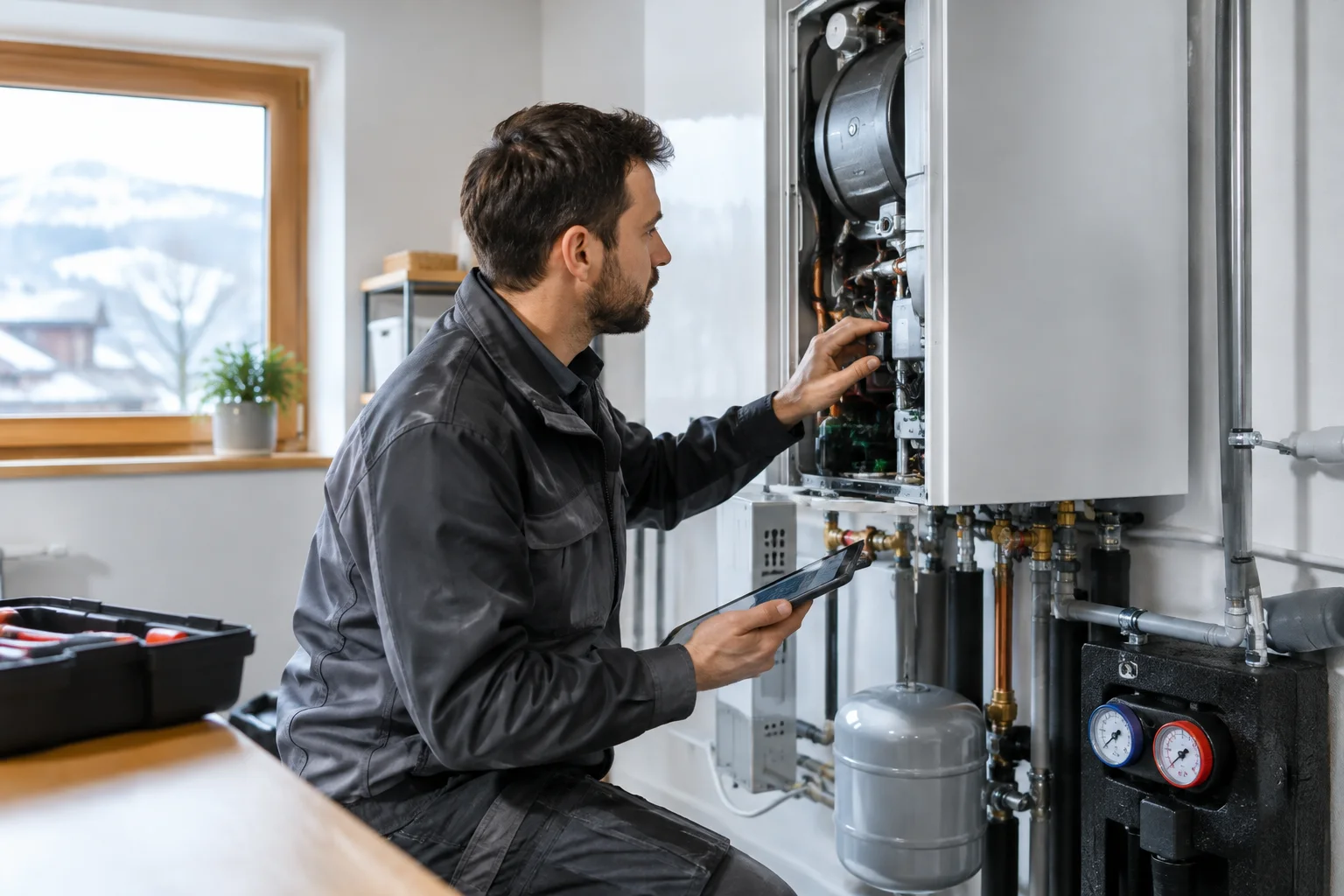
Older installations, recent renovations and homes with new high-load equipment should be assessed by a qualified electrical professional. A check can identify overloaded circuits, outdated protective devices, poor connections and issues with earthing or residual-current protection.
Professional advice is particularly important before installing an electric vehicle charging point, heat pump, photovoltaic system, battery storage, sauna or additional electric heating. The electrician can verify compatibility, capacity and compliance with applicable Swiss requirements before work begins.
Save energy without compromising safety
The safest savings usually come from reducing unnecessary use, choosing efficient equipment and maintaining the installation properly. Avoid improvised wiring, cheap uncertified accessories and repairs that conceal rather than resolve a fault. Energy efficiency should never involve disabling protection or exceeding the limits of a circuit.
LDT Services can help homeowners assess electrical consumption, investigate faults, improve lighting and plan safe upgrades for modern electrical equipment. Contact our team to arrange professional advice or an electrical inspection for your property in Switzerland.