FR
Français
FR
Français
 DE
Deutsch
DE
Deutsch
 IT
Italiano
IT
Italiano
 EN
English
EN
English
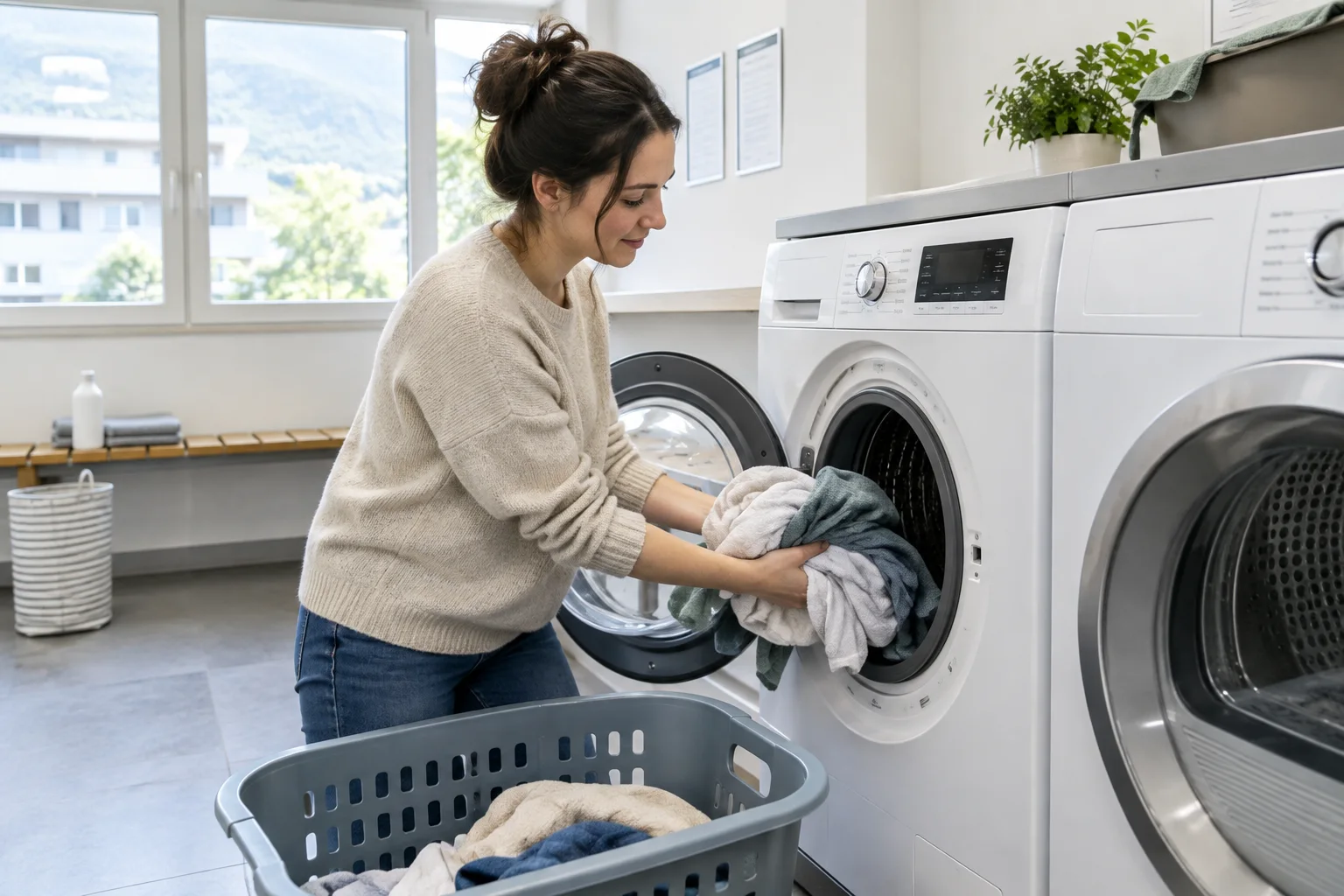
Practical Ways to Save Energy and Protect Equipment in a Shared Laundry Room
Simple, safe habits can reduce energy use, prevent avoidable damage and keep a shared laundry room reliable for everyone.
A shared laundry room is used by many households, so small habits can make a noticeable difference. Efficient washing and drying reduce electricity and water consumption, while correct use helps protect washing machines, tumble dryers and the building’s electrical installation.
These recommendations are suitable for apartment buildings, condominiums and other shared residential properties in Switzerland. Always follow the manufacturer’s instructions and your building’s laundry-room rules.
Use washing machines efficiently
- Run full loads where practical. Avoid starting a machine for only a few items, but do not overload the drum. Clothes need enough space to move freely and rinse properly.
- Select an appropriate temperature. Modern detergents often clean everyday laundry effectively at 20°C or 30°C. Use higher temperatures only when required by the fabric, hygiene needs or care label.
- Choose eco programmes when suitable. Eco cycles may take longer, but they generally use less water and energy. Do not interrupt a programme unless the appliance instructions permit it.
- Use the correct amount of detergent. Overdosing does not necessarily improve cleaning. It can leave residues, create excess foam and require additional rinsing.
- Check pockets and fastenings. Coins, keys and small metal objects can damage the drum, pump or door seal. Close zips and follow garment-care instructions.
Reduce tumble-dryer consumption
- Spin laundry properly before drying. Removing more water in the washing machine usually reduces the time and energy needed in the dryer, provided the fabrics can tolerate the selected spin speed.
- Clean the lint filter after every cycle. A blocked filter restricts airflow, increases drying time and can create a safety risk. Dispose of lint according to local building and municipal guidance.
- Do not overload the dryer. Overloading prevents warm air from circulating and can result in damp laundry, longer programmes and unnecessary wear.
- Separate heavy and light fabrics. Towels and bedding dry differently from lightweight clothing. Sorting can improve results and prevent delicate items from being exposed to excessive heat.
- Air-dry when practical. Drying racks can reduce energy use, but keep ventilation adequate to limit condensation and mould. Do not block radiators, vents or escape routes.
Protect the shared electrical installation
Shared laundry rooms can place a significant load on the building’s electrical system when several appliances operate at the same time. Use only the sockets and equipment provided for the laundry room. Never use extension leads, multi-plug adapters or improvised connections unless they are specifically approved and installed by a qualified professional.
- Keep plugs, sockets and appliance controls dry.
- Do not operate an appliance with a damaged cable, loose plug, cracked housing or signs of overheating.
- Never remove protective covers or attempt to repair internal electrical components.
- Do not connect a private appliance without checking the building’s rules and electrical capacity.
- If a fuse, circuit breaker or residual-current device trips repeatedly, stop using the affected appliance and report the issue to the property manager or a qualified electrician.
Prevent water damage and appliance faults
- Check that the washing-machine door is fully closed before starting a cycle.
- Look for leaks around hoses, taps and the detergent drawer, but do not tighten or replace connections if you are unsure how to do so safely.
- Keep the floor around appliances clear and report standing water immediately.
- Do not force a door open while a machine is running or when water may remain inside.
- Leave the room tidy so the next user can identify leaks, obstructions or other problems easily.
Use shared facilities fairly
Respect the booking system and remove laundry promptly when the cycle has finished. This avoids unnecessary repeat visits, prevents clothes from remaining damp for too long and helps other residents use the machines efficiently. If the building has time restrictions or recommended operating hours, follow them. Electricity tariffs and building policies vary, so residents should not assume that a particular time of day is always cheaper.
Know when to report a problem
Contact the property manager, caretaker or authorised maintenance provider if you notice burning smells, smoke, unusual sparking, repeated circuit trips, strong vibration, persistent leaks or abnormal noises. In an emergency, stop using the equipment if it is safe to do so, keep away from exposed electrical parts and follow the building’s emergency procedure. If there is immediate danger, call the appropriate emergency services in Switzerland.
A simple shared-laundry checklist
- Sort laundry and check pockets.
- Select the lowest suitable temperature and an efficient programme.
- Load the machine correctly without overfilling it.
- Use the recommended detergent quantity.
- Clean the dryer filter after use.
- Check for leaks, unusual smells or damage.
- Report faults instead of attempting electrical repairs.
Consistent, considerate use protects the laundry equipment, reduces avoidable energy consumption and helps keep the building’s electrical and water installations safe. For inspections, appliance faults or shared-laundry maintenance, use a qualified and authorised service provider.