FR
Français
 DE
Deutsch
 IT
Italiano
 EN
English
Practical Tips to Save Energy and Protect Your Home Appliances
Reduce household energy use, extend appliance life and improve safety with simple, practical habits for kitchens, laundry rooms and living spaces in Switzerland.
Household appliances make everyday life easier, but they can also account for a significant share of a home’s electricity use. Good maintenance and a few simple habits can help reduce energy consumption, protect your appliances and lower the risk of avoidable faults.
These recommendations are suitable for everyday use in Swiss homes. Always follow the manufacturer’s instructions and contact a qualified professional for electrical repairs, damaged wiring or persistent faults.
Choose efficient appliances
When replacing an appliance, check its energy label and compare annual consumption rather than focusing only on the purchase price. A more efficient refrigerator, washing machine, tumble dryer or dishwasher may cost more initially but can reduce running costs over its service life.
- Choose an appliance that matches your household’s actual capacity needs.
- Compare the stated annual energy and water consumption.
- Consider repairability, spare-parts availability and warranty coverage.
- For refrigeration appliances, check that the model is suitable for the available space and ventilation requirements.
Reduce standby consumption
Televisions, entertainment systems, computers, printers and chargers can continue to use electricity when left in standby mode. Switch off equipment when it is not needed, especially during holidays or extended periods away from home.
Use a properly rated switched power strip for groups of compatible devices. Do not overload sockets or connect power strips in series. Chargers should be unplugged if they become unusually warm, damaged or make a noise.
Use kitchen appliances efficiently
Refrigerators and freezers
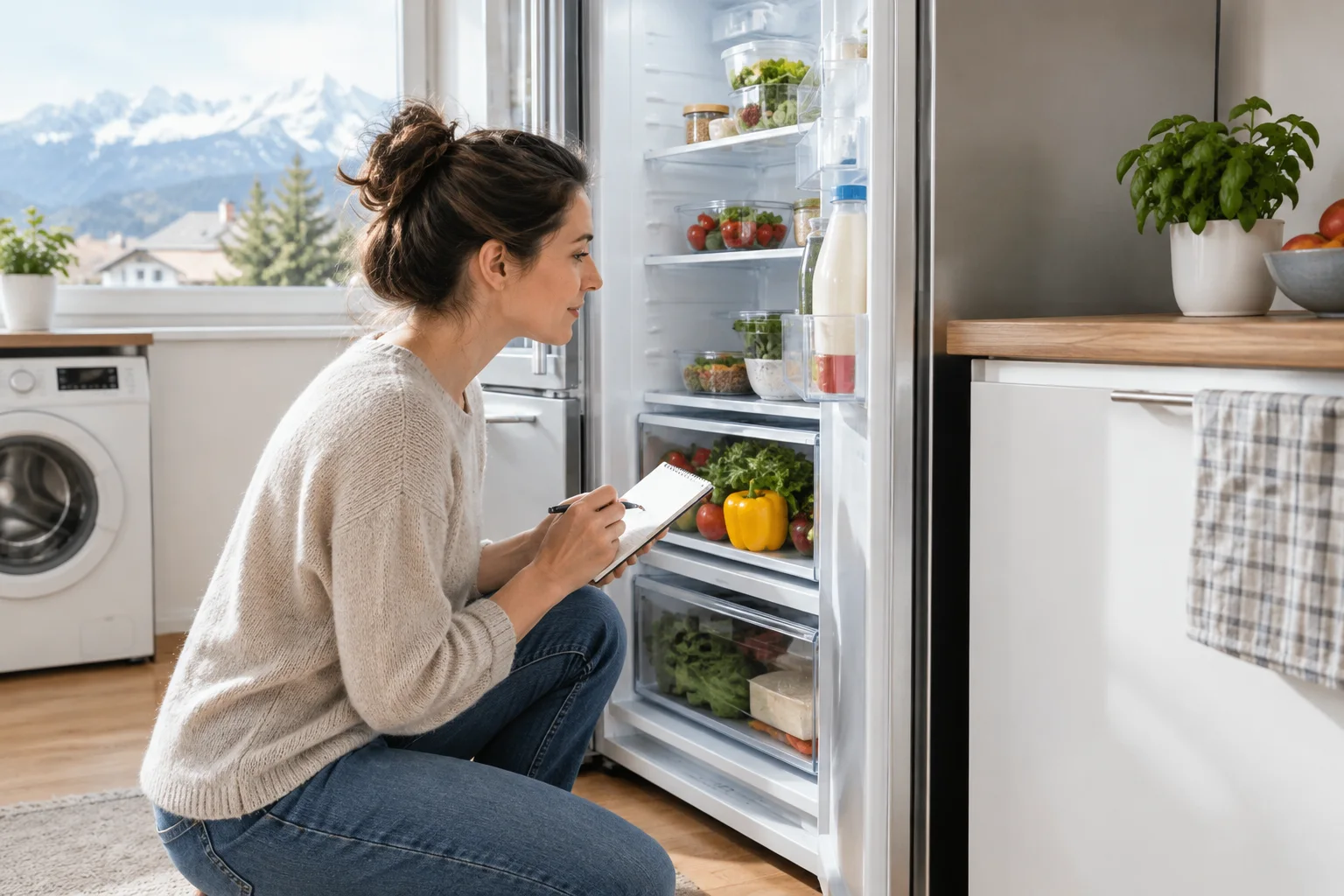
- Set the refrigerator to approximately 4 °C and the freezer to approximately −18 °C, unless the manufacturer specifies otherwise.
- Allow hot food to cool before placing it in the refrigerator, while following food-safety guidance.
- Keep doors closed as much as possible and check that seals are clean and intact.
- Leave sufficient space around the appliance for ventilation.
- Defrost a manual-defrost freezer when ice build-up becomes significant.
A refrigerator that runs continuously, forms excessive ice or has a damaged door seal may need professional inspection.
Ovens, hobs and microwaves
- Use the correct pan size and keep lids on pots where practical.
- Match the pan base to the cooking zone and keep the base flat and clean.
- Avoid opening the oven unnecessarily during cooking.
- Use a microwave for suitable small portions, but do not operate it empty or with unsuitable materials.
- Clean grease and food residue regularly to maintain performance and reduce fire risk.
Make laundry more energy efficient
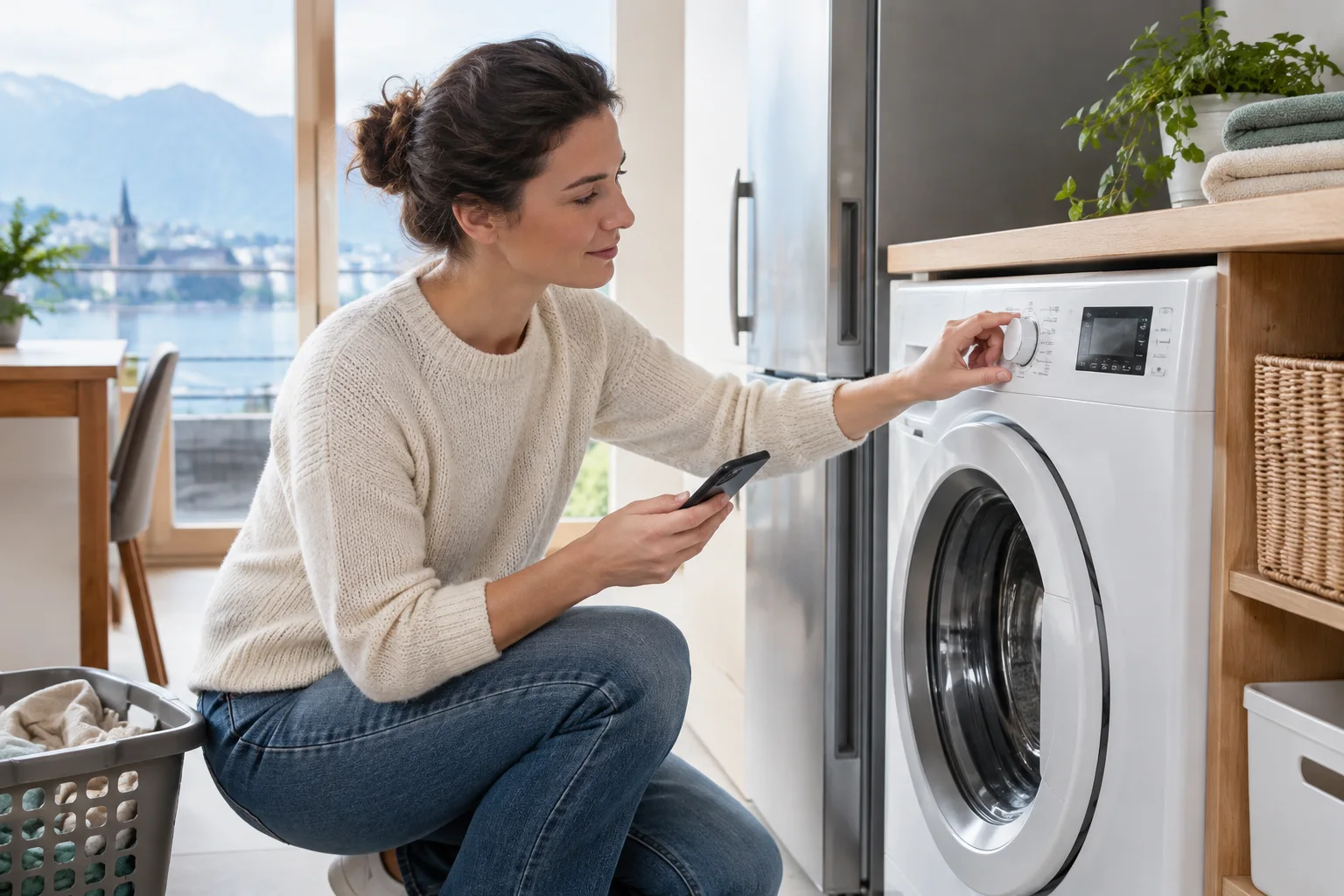
Washing at lower temperatures can reduce energy use, provided the programme is suitable for the fabric and hygiene requirements. Run the washing machine and dishwasher with full, balanced loads rather than half-empty cycles, but do not exceed the manufacturer’s loading guidance.
Use the highest spin speed suitable for the textiles before using a tumble dryer. Clean the tumble dryer’s lint filter after every cycle and keep the condenser or heat-exchanger area clean according to the instructions. Ensure the air outlet and surrounding space are not obstructed.
Never use a washing machine or tumble dryer if you notice burning smells, unusual noises, leaks, repeated tripped breakers or a damaged power cord. Stop using the appliance and arrange a qualified inspection.
Protect appliances from moisture and poor ventilation
Keep electrical appliances and their connections away from standing water. Do not operate appliances with wet hands, and do not use extension leads in areas where they may be exposed to water unless the equipment is specifically designed and approved for that environment.
Do not cover ventilation openings on refrigerators, freezers, ovens, boilers or other appliances. Restricted airflow can cause overheating, reduce efficiency and shorten equipment life.
Inspect cables, plugs and sockets safely
Occasionally check visible cables, plugs and sockets for cuts, crushing, discolouration, loose parts or signs of overheating. A hot plug, buzzing socket, burning smell, smoke or repeated circuit-breaker trips is a warning sign.
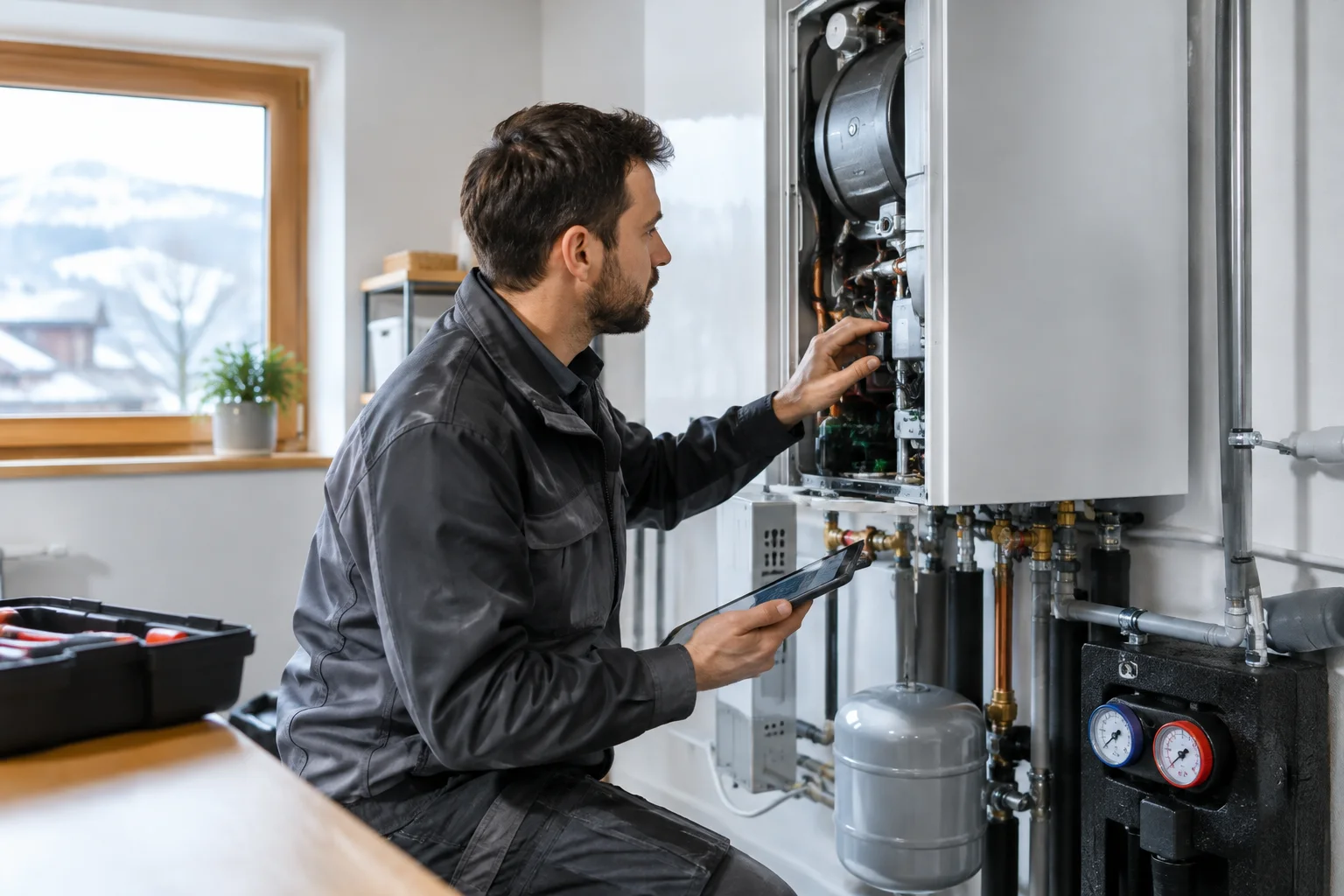
Switch off and unplug the appliance if this can be done safely, keep clear of damaged equipment and contact a qualified electrician or appliance technician. Do not remove covers, bypass protective devices or attempt internal repairs unless you are authorised and properly qualified to do so.
Prepare appliances for holidays and seasonal changes
Before leaving home, switch off non-essential appliances and unplug equipment that does not need to remain powered. Keep essential systems, such as refrigeration or heating controls, connected as required. Follow the appliance manufacturer’s instructions when shutting down or restarting equipment.
After a power interruption, restart sensitive equipment carefully. If an appliance behaves abnormally after an outage or surge, disconnect it safely and arrange an inspection rather than repeatedly resetting it.
When to call a professional
Professional help is recommended when an appliance repeatedly trips a protective device, gives off a burning smell, causes shocks or tingling, leaks near electrical parts, overheats, or shows visible cable or plug damage. A qualified technician can identify whether the problem comes from the appliance, the socket, the circuit or the installation.
Regular maintenance and prompt repairs are usually less costly than replacing an appliance after preventable damage. If you are unsure about the condition of an electrical installation or appliance connection, contact LDT Services for practical advice and a professional assessment in Switzerland.